
How to Protect Trees Before Hurricane Season
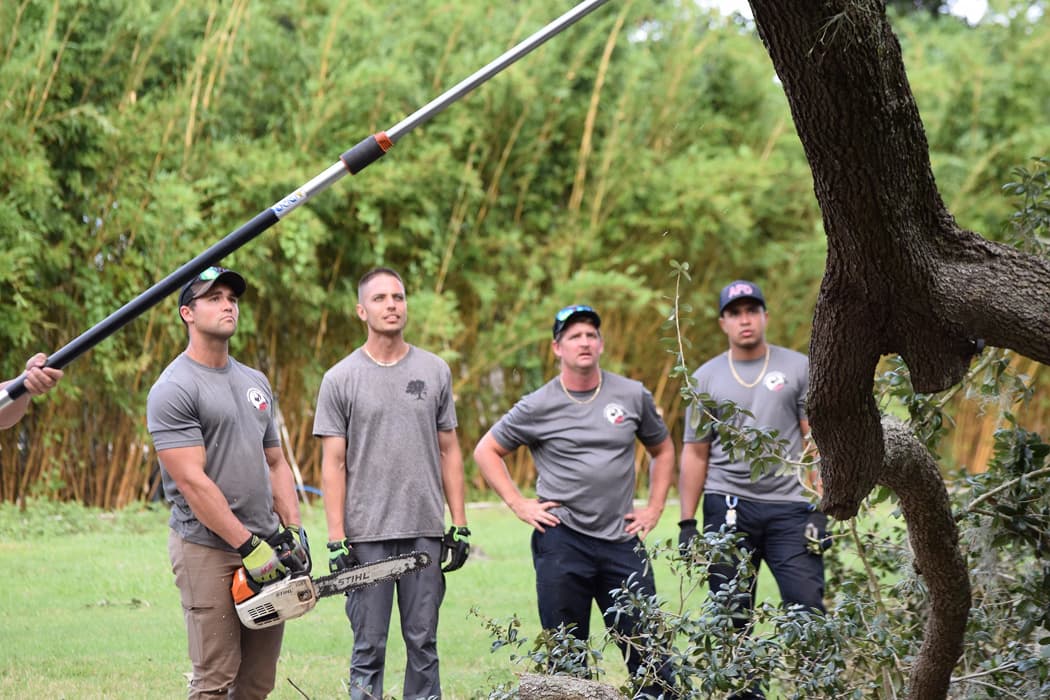
Every Central Florida homeowner knows the feeling: a tropical system spins up in the Atlantic, the cone of uncertainty drifts toward Orlando, and suddenly you are looking at the big oak in your backyard wondering whether it will still be standing next week. At Cox Arboriculture Services, we have spent years preparing trees across Orlando, Winter Park, and the surrounding communities for hurricane season, and we can tell you with confidence that the trees that survive storms best are almost always the ones that were cared for before the wind arrived. The work you do in May and June determines how your trees behave in September.
This guide walks through exactly how we help homeowners storm-proof their trees—what to prune, what to inspect, what to support, and what to remove—so you head into hurricane season with confidence instead of dread.
Why Hurricane Prep Starts Long Before the Storm
Trees are remarkably good at withstanding wind when they are healthy and structurally sound. The failures we see during hurricanes are rarely random—they are usually the predictable result of pre-existing problems: dense, unpruned canopies that catch wind like a sail, weak branch unions, decayed trunks, and shallow or compromised root systems. A hurricane does not create these weaknesses; it simply finds them.
That is why hurricane preparation is a year-round mindset, not a last-minute scramble. Once a storm is 72 hours out, it is genuinely too late to do meaningful tree work safely—and reputable companies will not be sending crews up into trees with a hurricane bearing down. The Atlantic hurricane season officially runs June 1 through November 30, with peak activity in August and September. The ideal time to prepare is late winter through early summer, well ahead of the dangerous months.
Step 1: Schedule a Professional Tree Risk Assessment
The single most valuable thing you can do is have a trained arborist evaluate your trees before the season. Many serious hazards are invisible to an untrained eye. We look for things homeowners routinely miss:
- Internal decay and hollowing in the trunk or major limbs, often hidden behind healthy-looking bark.
- Included bark and weak V-shaped branch unions that are prone to splitting under load.
- Root problems—girdling roots, root rot, or roots severed by past construction or trenching.
- Lean, especially a recent or worsening lean with soil heaving at the base.
- Co-dominant stems and over-extended limbs that act as levers in high wind.
A professional tree health assessment in Orlando gives you a clear, prioritized picture of which trees are storm-ready, which need work, and which pose enough risk that removal is the safer choice. This is the foundation everything else builds on.
Step 2: Prune for Wind Resistance (Not Just Looks)
Proper pruning is the heart of hurricane prep, but it has to be done correctly. The goal is to reduce the canopy's "sail effect"—letting wind pass through the tree rather than pushing against a solid wall of foliage—while keeping the tree healthy and structurally balanced.
The right techniques matter enormously:
- Crown thinning selectively removes interior branches to let wind flow through. Done properly, it reduces wind load without stripping the tree.
- Crown reduction shortens over-extended limbs that act as levers, lowering the mechanical stress on the trunk and roots.
- Deadwood removal eliminates the dead and dying branches most likely to become projectiles.
- Structural pruning corrects weak unions and establishes a strong, dominant central leader on younger trees.
Just as important is what not to do. Avoid "hurricane cutting" or over-thinning—the practice of stripping a tree down to a few branches or "lion-tailing" (removing all the interior foliage and leaving tufts at the ends). This is one of the most damaging myths in tree care. It actually makes trees more likely to fail by concentrating weight at the branch tips, starving the tree, and triggering weak, fast regrowth. We follow ISA pruning standards, which generally recommend removing no more than about 25% of a mature tree's live canopy in a single season. Our tree trimming services and tree pruning in Orlando are built around these standards.
Step 3: Support Structurally Valuable Trees with Cabling and Bracing
Sometimes a tree is worth saving but has a structural weakness—a split-prone double trunk, or a heavy lateral limb you would rather not remove. In these cases, professional cabling and bracing can provide supplemental support, redistributing stress and reducing the chance of catastrophic failure during high wind.
This is precision work. Cables and braces must be installed at the correct height and tension using proper hardware, and they need periodic inspection. Improperly installed support systems can do more harm than good. When we identify a high-value tree that is structurally salvageable, cabling can be a smart alternative to removal—but it is always part of a broader management plan, not a magic fix.
Step 4: Take Care of the Roots
A tree is only as stable as its root system, and roots are where many hurricane failures truly begin. Central Florida's sandy soils drain quickly but offer less anchoring than heavier clay soils, and our trees are especially vulnerable to uprooting when the ground is saturated by days of tropical rain.
To keep roots strong and stable:
- Protect the root zone. Avoid compacting soil, paving, or trenching within the critical root area. Construction and landscaping projects are a leading cause of hidden root damage that shows up years later as a storm failure.
- Mulch correctly. A 2–3 inch layer of mulch over the root zone conserves moisture and protects roots—but keep it pulled back from the trunk. "Volcano mulching" piled against the bark invites rot.
- Water wisely. Deep, infrequent watering encourages roots to grow downward and outward, building a more stable anchor than shallow, frequent watering.
- Watch for root rot and fungal conks, which signal a compromised anchor system. Our tree root management in Orlando addresses these issues directly.
Step 5: Remove the Trees That Are Simply Too Risky
This is the hardest conversation we have with homeowners, but it is sometimes the most important one. Some trees are too far gone—severely decayed, dangerously leaning, or planted in a spot where failure would be catastrophic—to be made safe by pruning or cabling. Heading into hurricane season with a known high-risk tree looming over your home is a gamble that rarely pays off.
We always favor preservation when it is responsible to do so, but when a tree poses an unacceptable risk, proactive professional tree removal before the storm is far safer and far less expensive than emergency removal after it has come down on your roof. Removing a hazard on a calm day, with full equipment access and no time pressure, is a controlled operation. Removing the same tree off your house at midnight during a tropical storm is not.
Right Tree, Right Place: Planning for the Long Term
If you are planting new trees or replacing ones lost to past storms, hurricane resilience should guide your choices. Some species hold up dramatically better than others in Central Florida's wind. Live oaks, bald cypress, sabal palms, and southern magnolias are among the more wind-resistant choices, while species like laurel oak, water oak, and many fast-growing softwoods are notably more failure-prone. Spacing trees properly and keeping them away from structures and power lines also pays off when the wind picks up. We are always happy to advise on species selection and placement during a consultation.
Your Pre-Hurricane Tree Checklist
As the season approaches, work through this short list:
- Schedule a professional tree risk assessment in spring or early summer.
- Have hazardous deadwood and weak limbs pruned to ISA standards.
- Thin dense canopies to reduce wind load—without over-pruning.
- Install or inspect cabling on structurally valuable trees.
- Protect and care for root zones; correct mulching and watering.
- Remove trees that are too decayed or dangerous to make safe.
- Clear yard debris and secure anything that could become a projectile.
For the bigger picture on minimizing storm damage and what to do during and after a storm, see our companion guide on hurricane tree damage prevention. And if a storm does cause damage, our emergency tree service checklist and storm damage cleanup in Orlando will help you recover quickly.
Let Cox Arboriculture Get Your Trees Storm-Ready
We have helped homeowners and businesses across Orlando, Winter Park, Maitland, Sanford, Casselberry, and the surrounding Central Florida communities prepare their trees for decades of hurricane seasons. Our licensed, insured team works to ISA and OSHA standards, and we bring the experience to tell the difference between a tree that needs a trim and one that needs to come down.
Do not wait until a storm is in the forecast. Schedule your pre-season tree assessment today by calling 321-382-8678 or reaching out through our contact page for a free estimate. A few hours of preparation now can save your home—and your trees—when the next big one rolls through.